


Most people moving from Dubai to Canada assume the answer is obvious air freight is faster, sea freight is cheaper, pick one and move on. In reality, the right answer depends on your household volume, your timeline, how your goods arrive in relation to when you do, and one critical piece of Canadian customs paperwork that many people get wrong. Get these factors aligned and the decision becomes straightforward. Miss one of them and you can find yourself either paying far more than necessary or stuck without your belongings at the wrong moment.
Whether you are relocating from Dubai or Abu Dhabi, this guide covers everything you need to make the right freight choice for your move to Canada.
Why Canada Is Different From Other Long-Haul Destinations

Canada is one of the most logistically involved destinations from the UAE. The distance alone means sea freight transit from Jebel Ali runs between four and six weeks, depending on the Canadian port. Vancouver on the West Coast and Montreal or Halifax on the East Coast are the primary arrival points, and the routing differs significantly between them. Then there is the customs process, which requires you to arrive in Canada before your goods do a detail that changes how many families plan their timeline.
According to the Canada Border Services Agency (CBSA), goods that arrive later will only qualify for duty and tax-free importation if they are listed on your original declaration at the time of your first entry into Canada. Canada Border Services Agency This single requirement shapes almost every freight decision on a Dubai-to-Canada move, and it is where the planning begins.
The Canadian Customs Process: B4 and B4A Forms
Before any packing happens, the Canadian customs documentation needs to be understood. Personal and household effects can be imported duty and tax-free into Canada, but only if you meet specific conditions and complete the right forms.
The two forms you need are:
- BSF186 (B4): The Personal Effects Accounting Document, listing all goods you are carrying with you on arrival into Canada
- BSF186A (B4A): The continuation sheet listing all goods that will follow you at a later date your sea freight shipment
You must present the B4 form at your first point of entry into Canada, even if that entry point is a layover stop on the way to your final Canadian destination. Seven Seas Worldwide Items listed on the B4A form can then be imported duty-free when they arrive, provided they were declared before you landed. Any item not on the B4A when you first arrive in Canada will be subject to duty and taxes when it is eventually shipped. There are no exceptions to this rule.
The practical implication is important: you need to know exactly what you are shipping before you travel to Canada. The inventory your moving company prepares before departure is not just an administrative step it is the foundation of your customs declaration.
To qualify for duty-free importation, goods must have been owned, possessed, and used by you prior to arriving in Canada. New or recently purchased items, duplicates of existing appliances, and goods intended for any commercial use are not covered by the exemption.
Please note that Canadian customs regulations may change. Always verify current requirements with the CBSA or contact Acorn Movers for up-to-date guidance.
Sea Freight: The Right Choice for Most Families

For anyone moving from Dubai to Canada with a full household, sea freight is the practical backbone of the move. A 20-foot container handles most two-to-three bedroom homes comfortably. A 40-foot container is available for larger households. Groupage, or shared container options, suit families with smaller volumes who do not need exclusive use of a full container.
Transit time from Jebel Ali to Vancouver is typically four to five weeks. To Montreal or Halifax via the East Coast, it runs five to six weeks. This means a shipment booked in late April or May from Dubai is likely to arrive in Canada in June or July a workable window for families targeting a summer arrival before the September school term.
Sea freight suits most full household relocations because the cost per cubic metre is significantly lower than air freight at scale. Furniture, white goods, clothing, books, kitchenware, and the accumulated contents of a family home simply cannot be shipped by air at reasonable cost.
There is one timing consideration worth planning around. Because CBSA requires you to arrive in Canada before your goods, many families fly ahead, present their B4 and B4A forms at the port of entry, and then wait for the sea freight shipment to arrive and clear customs. This works well when the family has somewhere to stay temporarily with family, in serviced accommodation, or in a furnished rental for the weeks the shipment is in transit.
Air Freight: When It Earns Its Place
Air freight from Dubai to Canada takes five to seven days in transit. That speed comes at a cost, and for household goods at volume it is rarely practical as a primary shipping method. Where air freight genuinely earns its place is in two scenarios.
The first is for time-critical items. Documents, medications, laptops, school materials, important clothing, and anything the family needs in the first weeks in Canada can travel by air. Shipping a modest air consignment alongside the main sea freight booking is a practical and common approach the family arrives, the air freight follows within days, and the sea freight arrives weeks later.
The second scenario is for smaller moves. Professionals relocating alone, or families moving with a limited volume of goods, may find that air freight for their entire consignment is a realistic option if the total volume is small enough to make the cost proportionate. Our team assesses this case by case during the initial survey.
How to Think About the Two Together
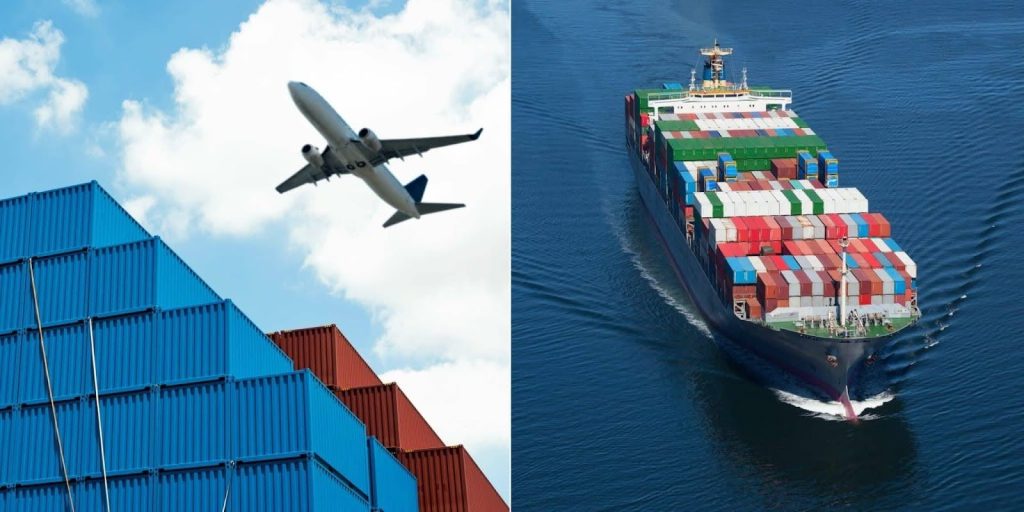
The smartest Dubai-to-Canada freight plan for most families combines both methods deliberately rather than treating them as alternatives. Here is how that typically looks:
- Sea freight takes the bulk of the household: furniture, kitchen equipment, clothing, books, art, and all non-urgent items
- Air freight carries immediate essentials: laptops, documents, medications, a few weeks of clothing, school items
- The family travels to Canada, presents their B4 and B4A forms at entry, and settles into temporary accommodation
- Air freight arrives within the first week, covering the family’s immediate needs
- Sea freight arrives four to six weeks later, clears customs with the stamped B4A as reference, and is delivered to the permanent address
This sequence keeps the family comfortable during the waiting period and ensures no duty complications arise on the sea freight shipment.
Destination Cities and Delivery
Canada’s geography means delivery from the port to the final address is a significant part of the journey. Vancouver arrivals serve British Columbia and western provinces. Montreal and Halifax arrivals serve Ontario, Quebec, and the Maritime provinces. Cross-country delivery for families moving to cities like Toronto, Calgary, or Ottawa adds road transit time and cost to the sea freight leg.
Acorn Movers coordinates the full door-to-door journey, from your home in Dubai or Abu Dhabi through to delivery at your Canadian address, regardless of which city you are heading to. Our team manages the Canadian customs clearance and final delivery coordination, so you are not managing logistics across time zones from a temporary address in a new country.
What the Move Looks Like in Numbers

Across the Dubai-to-Canada route, the planning window matters more than on shorter routes. Given the four-to-six week sea transit, families targeting a June or July arrival in Canada need to be packing in April or early May. The documentation requirements particularly the B4A goods-to-follow list need to be finalises before departure, not after.
Families who try to add items to their B4A after landing in Canada cannot do so. The list is fixed at the point of first entry. This is the single most common customs complication on this route, and it is entirely avoidable with good preparation before departure from the UAE.
Making the Right Call Starts Here
The freight decision on a Dubai-to-Canada move is less about sea versus air in isolation and more about how both methods work together within your specific timeline and household volume. Getting that right is what our team does every day.
If you are planning your move to Canada this year, start the conversation now while there is time to prepare the documentation properly and book your preferred freight window. Fill in our online quote form or drop us a message on WhatsApp we will help you map out the right freight plan for your household, your timeline, and your Canadian destination.