


August in Montreal is one of the best months the city produces. The terraces are full, the festivals run back to back, and the city operates with a warmth that surprises people expecting Canadian reserve. For Dubai expats making the move, the contrast is real but manageable. Montreal is bilingual, affordable by major-city standards, and built around a quality of life that rewards people who choose it deliberately. It is also genuinely different from a Toronto or Vancouver relocation, in ways that affect both the decision to go and the logistics of getting there.
The freight route east serves Montreal well, and the Canadian customs process is the same regardless of province. What changes is the Quebec context: the language, the culture, the school system, and the specific character of the neighbourhoods families and professionals settle into.
Who Makes This Move

The profile is more varied than most Canadian destinations. Professionals heading to roles in aerospace, technology, pharmaceuticals, finance, and academia make up a significant share. Montreal is home to major employers in all of these sectors, and the city draws international talent that finds the combination of career opportunity and cost of living difficult to match elsewhere in Canada.
French-speaking professionals from the UAE are a growing segment, particularly those who studied in France or Francophone institutions and want to maintain a French-language environment. Montreal gives them that, within a North American framework.
Families are also a strong part of the picture, often choosing Montreal over Toronto or Vancouver because the housing costs are considerably lower and the lifestyle proposition is different. Abu Dhabi residents make this move as well, particularly those in aerospace and defence where the sector ties between the UAE and Quebec run deep through companies like Bombardier and CAE.
Montreal vs Toronto: What Actually Differs
Both cities are large, multicultural, and well-connected. The practical differences matter more than they might first appear.
Montreal’s housing costs are considerably lower. According to Statistics Canada, Montreal’s average rental costs run well below Toronto’s across all apartment sizes, which is a significant factor for families arriving without a company housing allowance.
The freight route is different too. Toronto-bound shipments from Dubai come in through Halifax or Montreal port and travel by road or rail west. For Montreal itself, the Port of Montreal on the St. Lawrence River handles direct container deliveries, which removes the inland transit leg and typically reduces door-to-door time compared to Ontario destinations.
Language is the most obvious difference. Quebec’s official language is French, and while Montreal is genuinely bilingual and English is widely spoken in professional settings, daily life, government services, and schools operate primarily in French. Families with children need to think through schooling options before arriving, as the English-language school system in Quebec is structured differently from the rest of Canada.
Where People Settle
Westmount sits within Montreal’s island as its own municipality, known for large heritage homes, excellent schools, and a predominantly English-speaking character. It is the first area most arriving Anglophone expat families consider, and the prices reflect the demand.
Outremont, on the northern slope of Mont Royal, draws French-speaking expats and families who want a European residential atmosphere with Paris-style boulevards, upscale independent shops, and proximity to the Université de Montréal. It is one of the most sought-after family areas in the city, and rents are high by Montreal standards.
The Plateau-Mont-Royal appeals to younger professionals and creatives, with Victorian row houses, parks, and a café culture that functions as the city’s social spine. Mile End, within the Plateau, has a distinct character of its own, with the creative and tech communities concentrated around its bagel shops and independent studios.
For families prioritising more space and access to English-language schools, the West Island suburbs including Beaconsfield, Pointe-Claire, and Dollard-des-Ormeaux offer larger homes, established community infrastructure, and a quieter pace at a lower cost than the island’s inner neighbourhoods.
Notre-Dame-de-Grâce (NDG) sits in the southwest of the island and is genuinely diverse, with a mix of English and French residents, strong schools, and housing that runs from affordable apartments to large family homes.
Freight from Dubai to Montreal
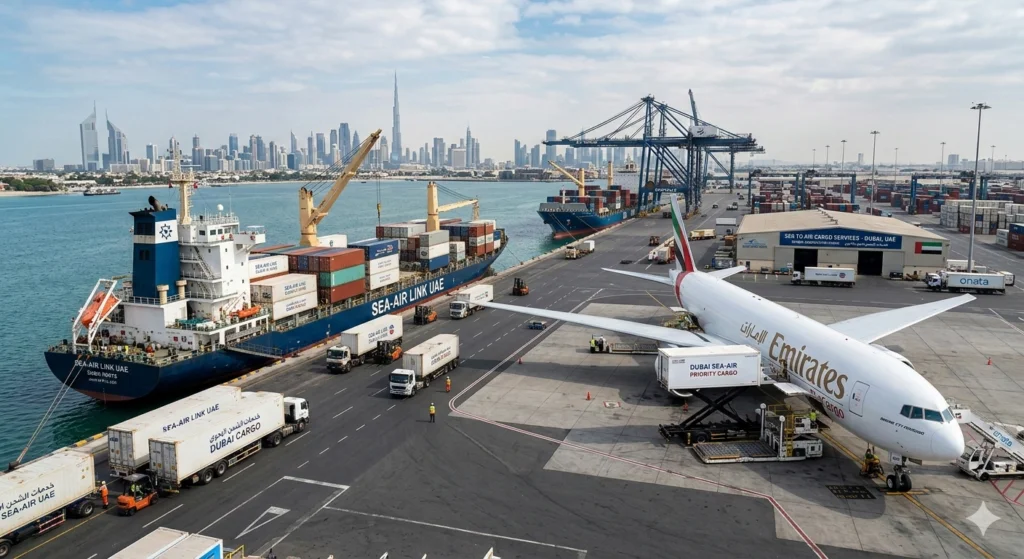
Sea freight from Jebel Ali travels west through the Suez Canal and across the Atlantic, arriving at the Port of Montreal on the St. Lawrence River. This is one of the more direct eastern Canadian routes, with containers arriving in Montreal without the additional inland transit required for Ontario destinations. Door-to-door transit for a full container load runs at approximately five to seven weeks, factoring in port handling and Canadian customs clearance.
Air freight suits priority shipments or smaller volumes. Dubai has connecting services to Montreal-Trudeau International Airport, with air freight door to door running at around seven to ten days. It is the right choice for professionals relocating ahead of their household goods and needing essentials on arrival.
Land freight is not relevant for this route. Dubai to Montreal is a sea and air move.
Canadian Customs: The B4 and B4A Process
The Canadian customs process for household goods is the same for Montreal as for any other Canadian destination. Incoming residents declare their personal effects using Forms BSF186 (B4) and BSF186A (B4A), managed by the Canada Border Services Agency. Used household goods owned and in personal use for at least six months can be imported duty-free, provided the forms are completed correctly.
The critical point, which the Calgary post also covers, applies equally here: the B4A must be stamped by a CBSA officer at your first port of entry in Canada when you land, not when your shipment arrives. If your goods are already in transit on a vessel when you first arrive in Canada, you must still declare them on the B4A at the border that day. Items not listed at that point become liable for duty and GST when they clear customs later.
The B4A requires an itemised inventory with each item described and valued in Canadian dollars. Your freight agent files the import entry using the stamped copy. Without it, the duty-free clearance cannot proceed.
New items purchased within six months of departure, alcohol, and tobacco are excluded from the duty-free exemption and must be declared and assessed separately.
Please note that customs and import regulations may change. Always verify with the relevant official authority or contact Acorn Movers for up-to-date guidance.
What You Cannot Ship
The categories most relevant to Dubai households:
- Firearms: Canada’s firearms legislation requires advance licensing and declaration for all items in this category. Do not pack without prior written clearance from the CBSA.
- Controlled substances: Certain prescription medications legal in the UAE are classified differently under Canadian federal law. Carry documentation for all prescription drugs.
- Fresh food: Fresh fruit, vegetables, meat, and dairy are restricted at the Canadian border. Commercially packaged and sealed food items are generally permitted but must be declared.
- Currency: Cash or monetary instruments above CAD 10,000 must be declared at the border.
- Alcohol and tobacco: Always dutiable. Declare them separately.
One Practical Note on Quebec

Quebec’s “Moving Day” falls on 1 July each year, when the majority of annual leases turn over simultaneously. It is a genuine logistical phenomenon: moving trucks book up months in advance, roads are congested, and building access is contested. If your arrival or delivery falls near that date, plan around it. Late June and mid-July are both manageable; 1 July itself is not the day to be moving furniture.
Winter is the other practical reality. Montreal receives significant snowfall, and delivery access in January and February is weather-dependent. Building access in older walk-up apartments can be limited with large furniture. Both are manageable with good coordination, but worth flagging with your freight agent before the delivery is scheduled.
Planning Your Timeline
An ideal Dubai-to-Montreal move starts six to eight weeks before departure. That covers the home survey, freight booking, B4A preparation, and packing without pressure.
Families targeting the September school year start need containers loaded from Dubai by late July at the latest for sea freight. Professionals starting a September role follow the same timeline. Anyone arriving in January for the winter semester needs a container loaded by mid-November.
Move Well, Arrive Ready
Acorn Movers manages Dubai to Montreal relocations as part of its Canada moves service. The team handles packing, sea freight coordination from Jebel Ali, CBSA documentation support, and delivery to your Montreal address. Both Dubai and Abu Dhabi departures are managed, with a single coordinator from booking through to delivery.
Montreal is a city that takes a little longer to understand than most, but people who choose it well tend to stay. Getting the move right from the start is the best way to give it a fair chance.
Request a quote to get a freight assessment and timeline confirmed. The team is also available on WhatsApp or by phone at +971 4 323 6920. The sooner the booking is confirmed, the more control you have over timing, particularly if the July and August sailing schedules fill up.